Hurricane Season and Your TV Antenna
How to Prepare Before the Storm
Hurricane Season and Your TV Antenna: How to Prepare Before the Storm
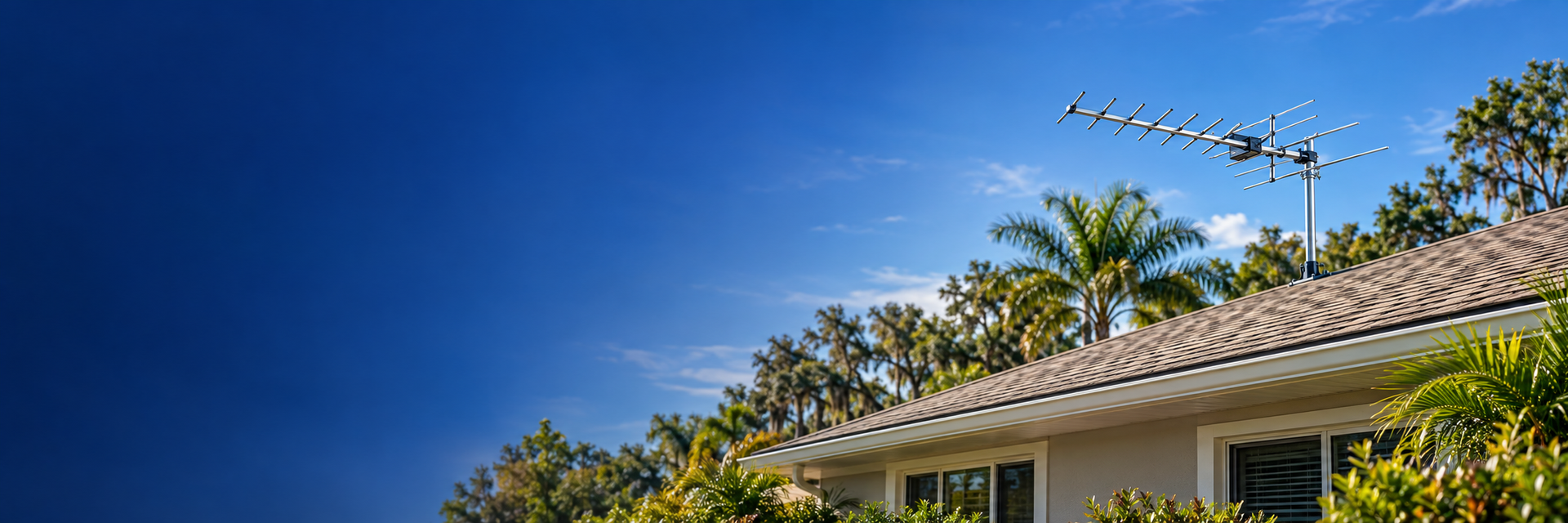
Florida residents know that hurricane season can bring strong winds, heavy rain, and power outages. While most homeowners focus on shutters, generators, and supplies, many forget about one important piece of equipment on their home—the TV antenna.
A properly installed antenna can continue providing local news and weather information when cable or internet service is unavailable. Taking a few simple precautions before a storm can help protect your antenna system and keep you informed when you need it most.
1. Inspect Your Antenna Before Hurricane Season
Look for signs of wear or damage, including:
- Loose mounting hardware
- Rusted brackets or mast sections
- Frayed or damaged coax cable
- Missing grounding wires
- Bent antenna elements
Even a small problem can become a major issue when exposed to hurricane-force winds.
2. Tighten All Mounting Hardware
Over time, bolts and clamps can loosen due to weather and temperature changes. Before storm season arrives, make sure:
- Mast clamps are secure
- Wall brackets are tight
- Guy wires (if installed) are properly tensioned
- Roof mounts show no signs of movement
A secure antenna is much more likely to survive high winds.
3. Check Your Grounding System
Proper grounding helps protect your home and equipment from lightning and electrical surges.
A professionally installed antenna system should include:
- Grounded mast
- Grounded coaxial cable
- Approved grounding hardware
- Connection to the home's electrical grounding system
If you're unsure whether your system is properly grounded, have it inspected before hurricane season.
4. Trim Nearby Tree Branches
Many antenna failures occur when limbs or debris strike the antenna during a storm.
Remove dead branches and trim trees that could fall against:
- The antenna
- The mast
- Coaxial cable runs
- Roof mounting locations
5. Secure Indoor Equipment
Power surges can damage televisions, DVRs, Tablo units, amplifiers, and other electronics.
Before a storm arrives:
- Use quality surge protectors
- Unplug equipment if severe weather is expected
- Back up important recordings if possible
6. Have a Backup Power Plan
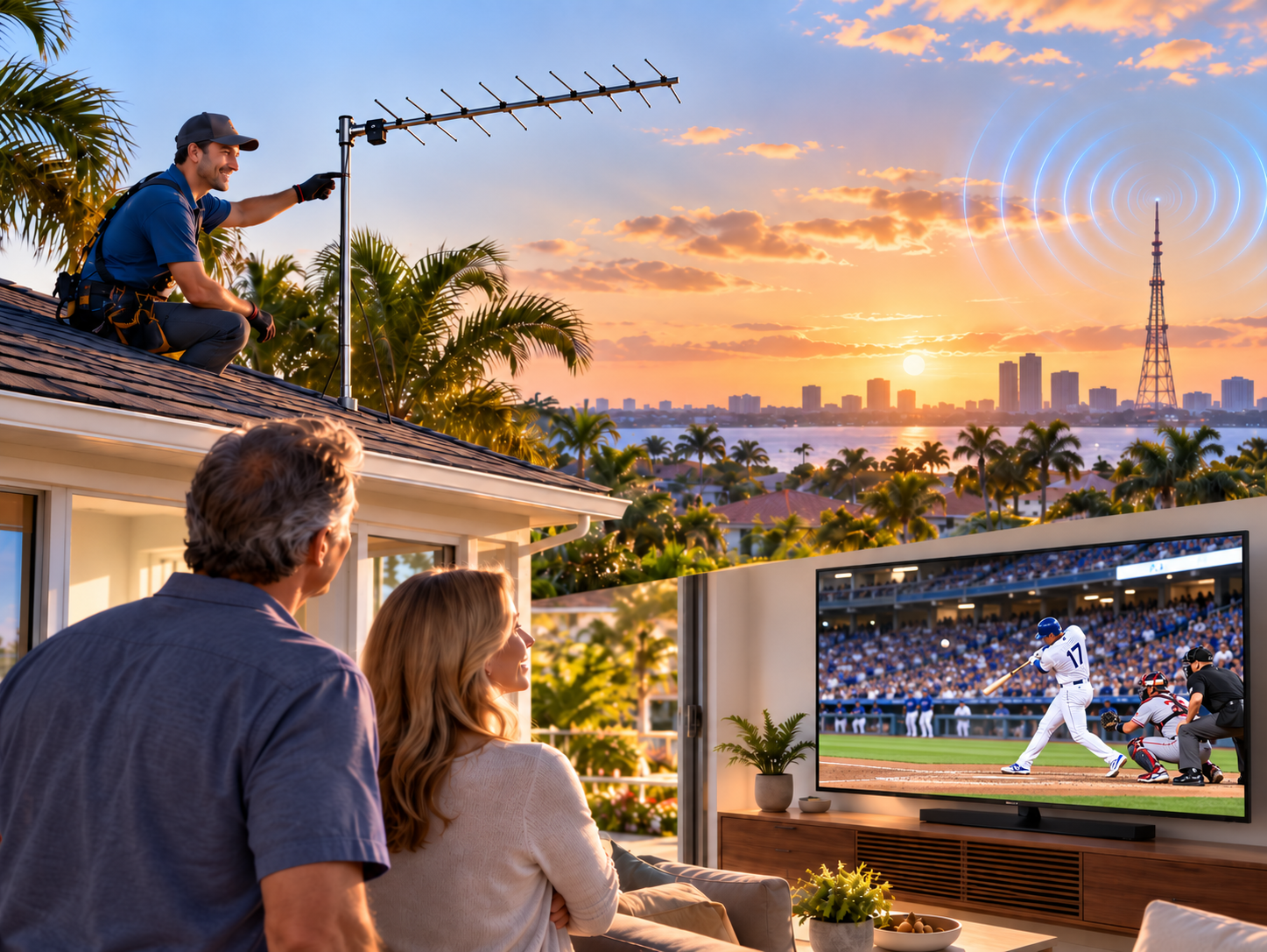
One of the biggest advantages of a TV antenna is access to free local broadcasts during emergencies.
A small generator, battery backup, or power station can allow you to continue receiving:
- Local news
- Weather updates
- Emergency information
- Evacuation notices
Even if internet service is unavailable, local television stations often remain on the air.
7. Schedule a Professional Inspection
The best time to discover a loose mount or damaged cable is before a hurricane—not after one.
A professional inspection can identify:
- Weak mounting points
- Grounding problems
- Weathered components
- Reception issues that may worsen during storms
Stay Informed When It Matters Most
A TV antenna can be one of the most reliable sources of emergency information during severe weather. With proper preparation, your antenna system can continue serving your family long after cable, fiber, or internet service is disrupted.
John's Antennas has been helping Central Florida homeowners stay connected since 1983. If you'd like your antenna system inspected before hurricane season, call today to schedule a service appointment.
John's Antennas
Serving Central Florida Since 1983
352-622-9000