TV Antennas and NextGen TV: A Smart Investment Today and Tomorrow
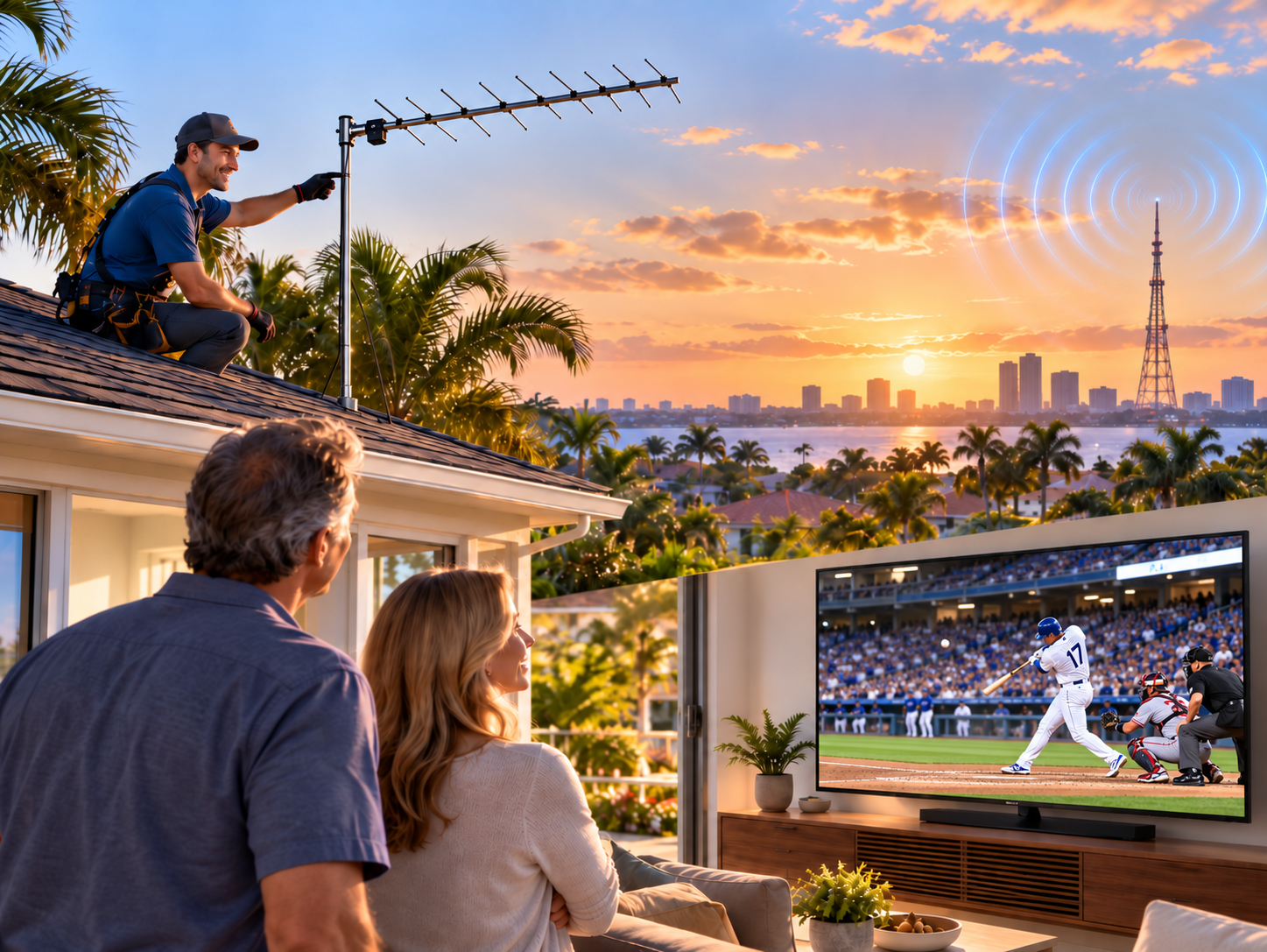
A properly selected antenna can bring you local television today—and remain useful as broadcast technology advances.
If you have been thinking about installing a television antenna, recent news about NextGen TV may have caught your attention. Broadcasters are promoting new features, and manufacturers are developing additional ways to receive them.
Here is the good news: NextGen TV does not inherently make today’s television antennas obsolete. A properly selected antenna that covers the frequencies used by your local stations can receive both traditional digital television signals and NextGen TV signals.
The equipment that interprets those signals—the tuner inside your television or an external receiver—is where the broadcast-format difference matters. You do not need to postpone enjoying local television simply because technology is advancing.
WHAT’S NEW: A NEXTGEN TV CAMPAIGN INCLUDES TAMPA
On September 16, 2026, Sinclair and Nexstar announced a joint consumer education campaign scheduled to begin September 17 in 13 television markets, including Tampa. The campaign introduces viewers to NextGen TV, also known as ATSC 3.0, and its potential picture, sound, and interactive features.
For Florida viewers, that creates a useful reason to understand the technology. However, a promotional campaign in Tampa does not mean every home in Central Florida receives those broadcasts. Availability at your property depends on which stations transmit the service and whether their signals reach your antenna.
WHAT DOES NEXTGEN TV CHANGE?
NextGen TV is a newer way for television stations to transmit digital programming. Depending on the broadcaster and receiving equipment, it can provide enhanced picture quality, improved sound, and additional services.
Those capabilities should not be confused with a promise that every program is broadcast in 4K. The experience depends on the station, the program, and your equipment.
Think of your reception system as two parts. The antenna collects the broadcast signal. The tuner translates the signal into the picture and sound you watch. Changing the broadcast format changes what the tuner must understand; it does not automatically change the antenna you need.
WILL AN ANTENNA PURCHASED TODAY RECEIVE NEXTGEN TV?
Yes, provided it covers the frequencies used by the stations you want and receives an adequate signal at your location. There is no special electronic decoder inside an ordinary antenna that becomes outdated when a station adopts ATSC 3.0.
That makes antenna selection a practical reception decision. Important considerations include:
• Whether the desired stations use VHF, UHF, or both.
• The direction and distance of the transmitting facilities.
• Trees, buildings, terrain, and other obstacles.
• Antenna height, placement, cable condition, and signal distribution.
A station’s familiar on-screen channel number does not necessarily identify its actual broadcast frequency. Selecting an antenna involves more than reading a mileage claim on the package.
An antenna working well for current broadcasts may also serve a NextGen TV receiver. Still, reception should be evaluated for the specific NextGen transmissions: stations may use a different transmitting facility or RF channel for the newer service.
DO YOU HAVE TO BUY A NEW TELEVISION?
An antenna installation does not require a NextGen TV purchase just to receive the traditional digital broadcasts available in your area.
To watch ATSC 3.0 specifically, you need a television with a compatible tuner or a suitable external NextGen TV receiver. A television being “smart” or “4K” does not, by itself, establish that it has an ATSC 3.0 tuner.
Compatible external receivers offer another option for keeping a television you already enjoy. Before purchasing one, check its connection requirements, support for the local broadcasts you want, and any internet requirements. Certified products are designed to receive protected NextGen TV programming, but recording and home-network features can differ between devices.
LOWER-COST CONVERTER BOXES ARE IN DEVELOPMENT
Another encouraging industry development came in September 2026, when manufacturer EKT demonstrated a Linux-based ATSC 3.0 converter-box platform at IBC Amsterdam.
According to Pearl TV, the design uses less memory than a comparable Android platform to help reduce costs. It supports both ATSC 1.0 and ATSC 3.0 and is intended to let viewers keep their existing televisions.
This was a product-platform demonstration, not an announcement of a confirmed U.S. retail price or delivery date. Compatible upgrade receivers already exist; the newer development points toward additional options.
WHY A GOOD INSTALLATION STILL MATTERS
New broadcast features begin with a usable signal. For homeowners around Ocala, The Villages, and surrounding Central Florida communities, the right antenna and installation location can make a substantial difference.
An attic may be suitable for one property, while another needs an outdoor installation. Amplification can help in certain systems, but it cannot create a usable signal where none exists, and excessive amplification can cause problems.
At John’s Antennas, we consider the property, desired stations, antenna placement, and equipment needed to deliver the signal to your televisions. That approach helps you make a useful investment today while keeping future receiver options open.
FREQUENTLY ASKED QUESTIONS
Will NextGen TV make my antenna obsolete?
No. The broadcast-format change does not inherently make an antenna obsolete. Its frequency coverage and reception performance remain the important factors.
Do I need a special “NextGen” or “4K” antenna?
Those labels alone do not establish better reception. Choose an antenna for the actual VHF and UHF signals you want to receive.
Can I keep my current television?
You can continue using it for broadcasts its tuner supports. A compatible external receiver may allow you to add NextGen TV without replacing the screen.
Does every smart television receive ATSC 3.0?
No. Check the exact model’s specifications for an ATSC 3.0 tuner or NextGen TV certification.
Does NextGen TV require internet?
Internet-connected features use broadband, and receiver requirements vary. Check the particular device’s requirements before buying, especially if you want to use it without home internet.
Should I wait to install an antenna?
There is no antenna-specific reason to wait simply because NextGen TV is developing. Choose equipment for your location and the broadcasts you can receive now.
ENJOY LOCAL TV TODAY, WITH ROOM FOR TOMORROW
A quality antenna installation can provide local news, weather, sports, and entertainment without a monthly subscription for the over-the-air channels you receive.
John’s Antennas has served Central Florida since 1983. Whether you want a professionally installed system or help selecting a DIY antenna, we can help you choose equipment suited to your property.
Contact John’s Antennas to discuss reception at your address and request an installation quote.
Reception and features vary by location, station, installation, and receiving equipment. Broadcast availability and product details may change.
Sources and Further Reading
NextGen TV campaign announcement—Sinclair and Nexstar