Can an HOA Stop You From Installing a TV Antenna? The FCC OTARD Rule Explained
Learn how the FCC OTARD rule protects homeowners who install TV antennas, what restrictions an HOA may still enforce, and what you can do if an antenna restriction interferes with reception.

Can an HOA Stop You From Installing a TV Antenna? The FCC OTARD Rule Explained
If you live in a deed-restricted community or homeowners association, you may have been told that outdoor television antennas are prohibited, must be hidden from view, or require approval from an architectural review committee.
Federal law may provide you with more protection than you realize.
The Federal Communications Commission's Over-the-Air Reception Devices Rule, commonly called the OTARD Rule, limits many restrictions that interfere with a person's ability to install, maintain, or use certain antennas.
The rule is found in 47 C.F.R. § 1.4000 and grew out of Section 207 of the Telecommunications Act of 1996. It applies to certain satellite, fixed-wireless, and television broadcast antennas.
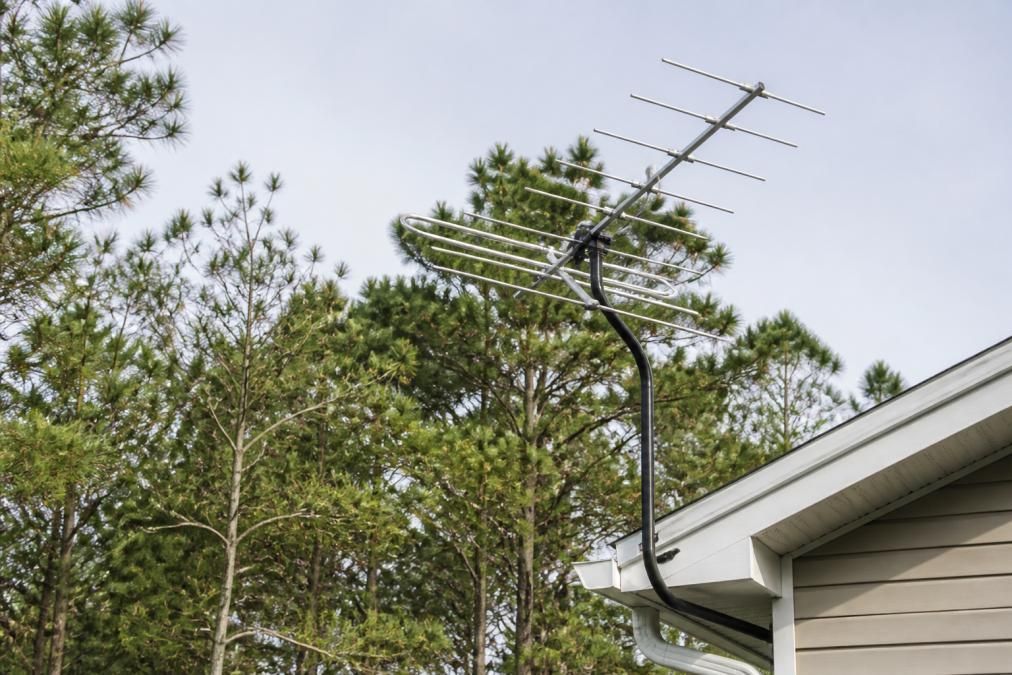
For homeowners interested in free over-the-air television, one of the most important protections is that OTARD covers an antenna designed to receive local television broadcast signals.
But OTARD does not mean that every HOA rule is automatically invalid.
That distinction is important.
What Does the FCC OTARD Rule Actually Prohibit?
Under the FCC rule, a restriction generally cannot impair your ability to install, maintain, or use a covered antenna.
The FCC identifies three primary ways a restriction may improperly impair antenna use:
- It unreasonably delays or prevents installation, maintenance, or use.
- It unreasonably increases the cost of installation, maintenance, or use.
- It prevents reception of an acceptable-quality signal.
The rule can apply to restrictions created by local governments as well as private restrictions imposed through HOA covenants, condominium rules, deed restrictions, leases, and similar agreements.
That means an HOA cannot necessarily enforce a restriction simply because the restriction appears in its covenants.
Federal law may preempt the restriction.
Can an HOA Require Approval Before You Install a TV Antenna?
This is one of the most important parts of the OTARD rule.
According to the FCC, rules requiring a permit or approval before installation can create an unreasonable delay and are generally prohibited.
A simple notification procedure may sometimes be permissible, but the notification cannot effectively become a prior-approval process or increase the cost or delay of the installation.
There are exceptions, particularly when a legitimate written safety requirement or historic-preservation issue is involved.
So a blanket statement such as:
“All antennas require architectural committee approval before installation”
may present a problem under OTARD when applied to a covered installation.
Can an HOA Tell You Where the Antenna Must Be Installed?
Sometimes.
This is where many homeowners—and sometimes HOAs—misunderstand the rule.
An HOA may establish reasonable placement preferences. For example, the association might prefer that an antenna be placed behind the house rather than on the side facing the street.
But the FCC says those placement preferences must not:
- substantially degrade reception,
- create an unreasonable installation expense, or
- unreasonably delay installation.
The FCC specifically gives an example in which requiring installation at the rear of a home could be prohibited if installing there costs significantly more than installing it on the side.
On the other hand, if the preferred rear location receives an acceptable signal and does not cause unreasonable additional cost or delay, the homeowner may have to comply with the restriction.
That is an extremely important part of OTARD.
The rule protects antenna reception. It does not automatically give the homeowner the right to choose any location they want.
What We Tell Our Customers About HOAs
At John’s Antennas, there is something we regularly tell customers who live in deed-restricted communities:
Even though the federal government may allow you to install an antenna, you still have to live with your HOA.
Winning an argument and having a good relationship with your neighbors are two different things.
If we can install an antenna in a location that gives the customer reliable reception and reasonably satisfies the HOA's appearance guidelines, that is normally the better solution.
We recommend trying to work cooperatively with the association first.
OTARD should protect your ability to receive television—not become an excuse to create an unnecessary dispute with your HOA.
Can an HOA Require the Antenna to Be Hidden?
Possibly, but again the requirement cannot impair reception or impose an unreasonable expense or delay.
The FCC gives examples involving landscaping and painting. Requiring expensive landscaping to screen an otherwise unobtrusive antenna may be unreasonable. A requirement to paint an antenna to blend with its surroundings could potentially be acceptable if doing so does not interfere with reception or impose an unreasonable cost.
The facts of each installation matter.
What About Safety Rules?
OTARD does not eliminate legitimate safety requirements.
The FCC specifically recognizes reasonable restrictions involving issues such as:
- proximity to electrical power lines,
- proper attachment and securing of antennas,
- fire-safety requirements, and
- other legitimate public-safety concerns.
However, the safety rule must be clearly defined, based on an actual safety objective, and no more burdensome than necessary. It also should not unfairly discriminate against antennas compared with similar objects of comparable size and weight.
This is one reason professional antenna installation can still be valuable even though an HOA generally cannot simply require professional installation of a receive-only antenna.
What About Historic Homes or Historic Districts?
Historic preservation is another recognized exception.
Restrictions may be permitted when necessary to protect a property or district that qualifies for historic protection. However, the restriction still must be no more burdensome than necessary and must be applied in a nondiscriminatory manner.
How High Can the Antenna Mast Be?
The FCC allows covered antennas to be mounted on a mast when additional height is necessary to receive an acceptable-quality signal.
However, a mast extending more than 12 feet above the roofline may become subject to permitting requirements for legitimate safety purposes.
The FCC also explains that the antenna and mast must remain within the antenna user's exclusive-use area to receive OTARD protection.
For a single-family homeowner, the exclusive-use area generally includes the home and property owned by that homeowner.
Condominiums and apartments can be different.
Does OTARD Protect Condo Owners and Renters?
Yes—but there is an important limitation.
The antenna generally must be located in an area that is under the resident's exclusive use or control.
For example, a private:
- balcony,
- terrace,
- patio, or
- deck
may qualify.
However, common areas such as a condominium roof, hallway, walkway, or exterior wall generally are not protected by OTARD if they belong to the association or are shared by the residents.
An antenna extending beyond a private balcony into common space can also lose OTARD protection.
This is why condominium installations should be evaluated particularly carefully.
What About Townhomes?
It depends upon who owns the roof, walls, and property.
If a homeowner owns the entire townhome—including the roof, exterior walls, and the land beneath it—the FCC says OTARD can apply much as it would to a single-family residence.
If the townhome is legally structured as a condominium and the roof or exterior walls are common property, the analysis is different.
Your ownership documents can therefore be very important.
Does OTARD Cover Any TV Station You Want to Receive?
Not necessarily.
This is a detail homeowners should know.
The FCC says OTARD covers television antennas designed to receive local television broadcast signals. The FCC's consumer guidance also specifically states that the rule does not apply to a conventional television antenna being used to receive a distant over-the-air television signal.
That distinction can matter in fringe or long-distance reception situations.
What If the HOA Provides a Community Antenna System?
There are circumstances in which a community association or landlord may require use of a central antenna instead of individual antennas.
However, the FCC places conditions on such restrictions.
Generally, the central system must provide the programming or service the resident wants, provide signal quality at least as good as an individual antenna, not cost more than using an individual antenna, and not unreasonably delay access to the desired service.
Simply telling residents that a community antenna may be available someday is not necessarily enough to prevent individual installations.
What Happens When the Homeowner and HOA Disagree?
The FCC encourages homeowners and associations to try to resolve disputes before formally filing a case.
That is also our recommendation.
Start by obtaining a copy of the exact covenant, architectural rule, denial letter, violation notice, or other restriction that is causing the problem.
Then determine exactly how that requirement affects the antenna installation.
Does it:
- prevent installation?
- cause unreasonable delay?
- substantially increase installation cost?
- force the antenna into a location where reliable reception cannot be obtained?
Those are much stronger arguments than simply saying, “Federal law says I can have an antenna.”
If the dispute cannot be resolved, either the resident or the restricting entity can ask the FCC for a Declaratory Ruling concerning whether the restriction is enforceable under OTARD.
Who Has the Burden of Proving the Restriction Is Legal?
This is another important protection.
According to the FCC, the entity attempting to enforce the restriction—such as the homeowners association, property owner, management company, or local government—has the burden of proving that the restriction is valid under the rule or qualifies for an exception or waiver.
That does not mean a homeowner should submit a poorly documented complaint.
Good documentation can make an enormous difference.
John's Antennas OTARD Petition for Declaratory Ruling Template
The FCC specifically states that there is no special FCC form required for an OTARD Petition for Declaratory Ruling.
A petitioner may explain the facts, identify the particular restriction being challenged, provide the parties' contact information, attach the restriction and relevant correspondence, and include photographs when appropriate.
To make that process easier for our customers, John's Antennas has created a Customer OTARD Petition Template.
This is not an official FCC form and is not legal advice.
Our template provides spaces for:
- homeowner or petitioner information,
- property and exclusive-use information,
- HOA or management-company information,
- antenna type and proposed installation,
- the exact restriction being challenged,
- an explanation of how that restriction affects reception, cost, or installation,
- previous efforts to resolve the dispute,
- supporting photographs and documents,
- an installer or signal-evaluation statement,
- a declaration, and
- a Certificate of Service.
The template is specifically designed to make the homeowner explain what the HOA is requiring and why the alternative location or requirement does not work.
[DOWNLOAD JOHN'S ANTENNAS OTARD PETITION TEMPLATE]
What Should Be Included With an OTARD Petition?
Documentation is important.
Our customer template recommends including the complete applicable HOA rule or covenant, violation or denial letters, photographs, relevant correspondence, and—when appropriate—an installer statement or signal report explaining why the required antenna location would reduce reception or increase the installation cost.
If John's Antennas has evaluated the property, an installer statement may be especially helpful because antenna placement is not simply a matter of appearance.
Trees, terrain, signal direction, mounting height, cable routing, and the construction of the home can all affect whether an antenna provides reliable reception.
You Must Also Serve the HOA
A homeowner who files a petition challenging an HOA restriction must provide the association or other restricting party with a copy of the petition and attachments.
The FCC also requires proof showing that service was completed, including information such as who was served, the date, and the method used.
Our template includes a Certificate of Service for that purpose.
How Is an OTARD Petition Filed?
The FCC's current guidance states that an OTARD petition and its attachments may be submitted electronically to:
The FCC also provides a mailing procedure through the Secretary of the Federal Communications Commission at its Washington, D.C. office.
Because government filing procedures can change, homeowners should verify the FCC's current filing instructions before submitting a petition.
Do not simply take the petition to a local FCC field office.
Can You Keep the Antenna Up While the FCC Decides?
According to the FCC, generally yes.
If a petition challenging a restriction is pending, the restriction generally cannot be enforced during the proceeding unless the restriction involves safety or historic preservation.
If the FCC ultimately determines that the restriction is valid, the FCC says the antenna user generally receives at least 21 days to comply. There are exceptions, particularly when the installation was never covered by OTARD in the first place—for example, an installation made on condominium common property.
The Best OTARD Dispute Is Often the One You Never Have
Federal law gives homeowners important antenna rights.
But exercising those rights does not have to mean fighting with your homeowners association.
At John's Antennas, our first objective is to find an installation that provides reliable television reception, is safe and professional, and—when reasonably possible—works within the appearance preferences of the community.
If the HOA's preferred location works, there is usually little reason to create a dispute.
If it does not work because of signal loss, unreasonable additional expense, delay, or another restriction addressed by OTARD, then the homeowner has federal protections and a process available to challenge that restriction.
That is the balance we try to explain to every customer:
You may have the legal right to install the antenna—but after the installation is finished, you still have to live with your HOA.
Read the FCC’s Official OTARD Guidance
Federal Communications Commission — Over-the-Air Reception Devices Rule:
https://www.fcc.gov/media/over-air-reception-devices-rule
Important Disclaimers
This article is provided for general consumer information and is not legal advice. OTARD cases depend on the facts of the particular property, antenna installation, ownership arrangement, restrictions, and community. Homeowners with a significant dispute, pending fines, litigation, or questions about their legal rights should consult the FCC and, when appropriate, a qualified attorney.
Editorial Note: John’s Antennas prepared this article using official FCC OTARD materials. AI tools assisted with research organization and drafting. The final content was reviewed and approved by John’s Antennas. This article is for general information and is not legal advice.